
How Long Does Planning Permission Take for a House Extension in South London?
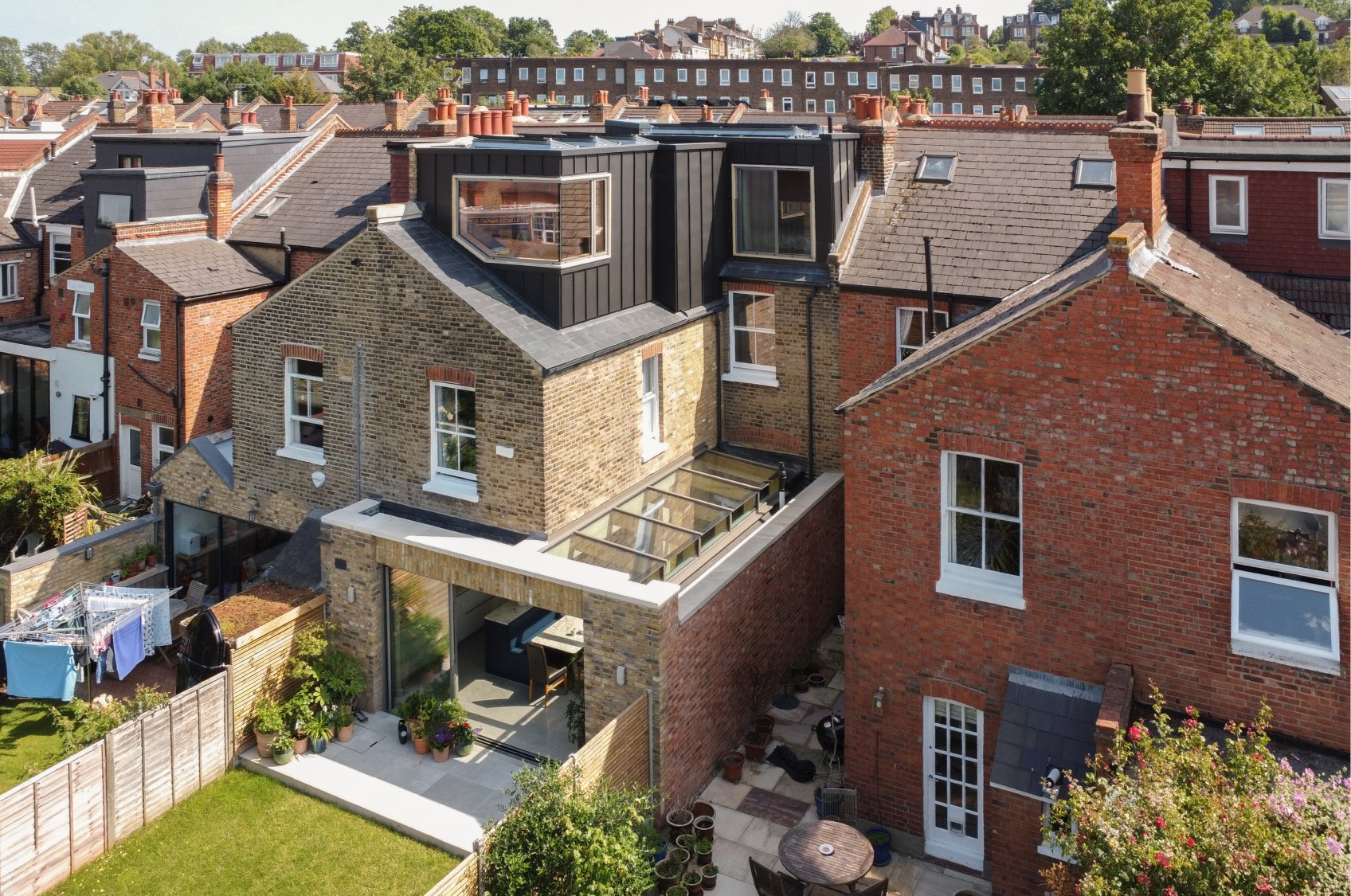
A valid householder planning application is normally expected to be decided within 8 weeks. However, the full timeline for a South London house extension is longer because the 8-week period starts only after the council has validated the application.
Before submission, time is needed to check the planning route, survey the property, develop the design and prepare the drawings and supporting documents. The council must then confirm that the application contains the required information before its decision period begins.
Requests for further information, design revisions or an agreed extension of time can affect the eventual decision date.
What is the difference between the full planning timeline and the 8-week decision period?
The full planning timeline runs from the early planning checks and design work through to the council’s decision. There is no standard duration for this complete process because each property, proposal and site has different requirements.
The 8-week decision period is narrower. It is the period in which a local planning authority is normally expected to decide a valid householder planning application. It does not include the design and preparation work before submission, and it does not necessarily begin on the day the application is submitted.
Before the 8-week period can begin, the application must be validated. Validation is the council’s check that the correct application has been made and that the required forms, drawings and supporting information have been provided. If anything is missing or inconsistent, the application may remain invalid until the issue is resolved.
What are the key takeaways?
A valid householder planning application is normally expected to be decided within 8 weeks.
The 8 weeks begin after validation, not at the start of the design process.
The complete timeline also includes planning checks, surveys, design development and application preparation.
Missing or inconsistent information can delay validation.
Further information, design revisions or an agreed extension of time can affect the decision date.
Careful preparation can reduce avoidable questions after submission.
What happens at each stage of a house extension planning application?

Understanding the sequence helps you set a realistic programme for a South London extension. The process begins before an application is submitted and continues through validation, consultation, assessment and the final decision.
Stage 1: How do you check whether planning permission is needed?
The first step is to establish which planning route is likely to apply.
Some house extensions require a planning application. Others may qualify as permitted development, depending on the property, the proposed design and any relevant restrictions.
The initial review may need to consider:
The proposed extension
The property’s planning history
Conservation-area considerations
Any relevant Article 4 directions
Constraints affecting the property or site
A residential architect in South London can review the property, relevant planning constraints and the likely route for your extension.
This review is best completed before the design becomes too fixed. Identifying relevant constraints early reduces the risk of developing a proposal that does not respond to them.
Stage 2: What needs to be prepared before submission?
Once the likely planning route is understood, the existing property must be accurately recorded and the extension design developed.
The application may require drawings and supporting documents that clearly explain:
The existing property and site
The proposed extension
The relationship with neighbouring properties
The proposed external appearance and materials
How the design responds to relevant planning considerations
Any particular site constraints
This stage has no standard duration. A straightforward proposal may develop more quickly than one involving a constrained site, several design options or further investigation.
Allowing enough time to test and coordinate the design can help prevent avoidable questions after submission.
Stage 3: What does validation mean?
Submitting an application does not necessarily start the council’s 8-week decision period.
Validation is the council’s check that the correct application has been made and that the required forms, drawings and supporting information have been provided.
If information is missing or inconsistent, the application may be treated as invalid. The decision period will not normally begin until the outstanding points have been addressed and the application has been validated.
Once validation is confirmed, the formal decision period begins from the relevant valid application date.
Stage 4: What happens during consultation and assessment?
During the assessment period, the local planning authority considers the design against relevant planning policy and the circumstances of the site. It also considers relevant comments received through consultation.
The assessment may include the proposal’s relationship with neighbouring properties, its external appearance and materials, and how it responds to identified site constraints.
The planning officer may ask for further information or design revisions before reaching a decision. If more time is needed, an extension of time may be agreed. These steps can move the decision beyond the original 8-week period.
Stage 5: What decision can the council make?
At the end of the assessment, the application may be:
Approved
Approved with conditions
Refused
The decision marks the end of the planning application period, but it is important to read the decision carefully and understand any conditions attached to an approval.
What can delay planning permission for a house extension?
Several practical issues can extend the timeline before or after submission.
An invalid application
Missing or inconsistent forms, drawings or supporting information can prevent validation. The 8-week decision period will not normally begin until the outstanding items have been provided.
Constraints identified late
Planning history, conservation-area considerations, Article 4 directions or other site constraints can affect the appropriate planning route and design. Discovering them after the proposal is well developed may lead to further work.
Unresolved design questions
The council may need clearer information about the extension’s appearance, materials, relationship with neighbouring properties or response to planning considerations.
Requests for further information or revisions
A planning officer may ask for additional information or changes during the assessment. The time needed to prepare and review these can affect the decision date.
An agreed extension of time
The applicant and local planning authority may agree to extend the assessment period beyond 8 weeks where more time is required.
How can you prepare for a smoother planning process?

Good preparation cannot guarantee a particular decision or timescale, but it can reduce avoidable uncertainty.
Before submitting an application:
Establish whether planning permission is required or whether another planning route may apply.
Review the property’s planning history and relevant site constraints.
Consider conservation-area requirements and any relevant Article 4 directions.
Record the existing property accurately.
Develop the design before preparing the final application drawings.
Explain the proposal’s appearance, materials and relationship with neighbouring properties clearly.
Check that the forms, drawings and supporting information are complete and consistent.
Allow for preparation and validation when planning the overall programme, rather than counting only the council’s 8-week period.
Frequently asked questions
Does the 8-week period begin when the application is submitted?
Not necessarily. The council must first validate the application. The 8-week decision period normally begins from the relevant valid application date.
What is a valid planning application?
A valid application is one that the council has checked and confirmed includes the correct application and the required forms, drawings and supporting information. Missing or inconsistent information may prevent validation.
Is the full planning process completed within 8 weeks?
Not usually. The 8-week period covers the council’s decision stage after validation. The full timeline also includes initial planning checks, surveys, design development, application preparation, submission and validation.
Do all house extensions need planning permission?
No. Some extensions may qualify as permitted development, subject to the property, the proposed design and relevant restrictions. The appropriate route should be checked before the design becomes fixed.
Can a householder planning application take longer than 8 weeks?
Yes. Further information, design revisions or an agreed extension of time can affect the decision date. Delays to validation can also extend the overall timeline before the formal decision period begins.
What outcomes can a planning application have?
A planning application may be approved, approved with conditions or refused.
Planning an extension in South London?
A realistic programme should account for design development, application preparation and validation as well as the council’s decision period.
If you are considering a house extension, speak with Marjoram Architects about the property, the proposed design and the likely planning timeline.
